How to Choose the Right Commercial Power Washer
Choosing the right commercial power washer is less about picking the biggest machine and more about matching equipment to the work you do every day. If your system is undersized, you lose time. If it’s oversized or mismatched, you risk inefficiency, surface damage, or unnecessary cost.
If you’re just getting started, it helps to first understand what defines a commercial power washer and how these systems are used across industries.
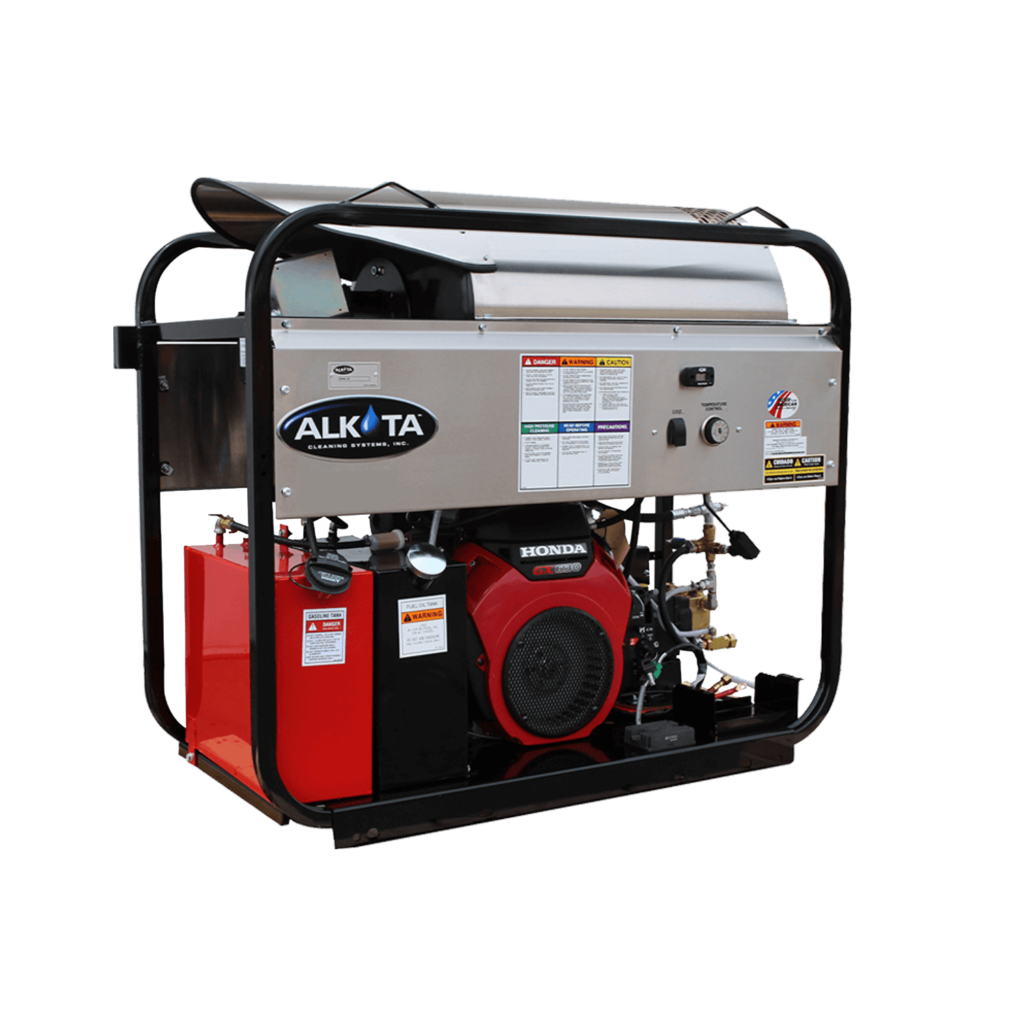
When You Actually Need a Commercial Power Washer
There’s a clear line between residential and commercial equipment – and it usually shows up when cleaning becomes part of your operation, not an occasional task. If you’re cleaning daily, covering large areas, or relying on cleaning for revenue or compliance, a commercial power washer is the right investment.
If you need a general overview of how these systems are built and where they are used, start with our Commercial Power Washers hub.
Commercial power washers are designed to:
- Run longer and more often without overheating.
- Deliver higher PSI and GPM for faster cleaning.
- Stand up to jobsite abuse, transport, and tougher environments.
- Be easier to repair and service, helping you get back up and running quickly.
If downtime costs you money, a commercial power washer is usually the smarter long-term investment.
The Official Buying Guide
This guide walks through the five key decisions that determine whether your equipment will actually perform in the field.
Define Your Cleaning Tasks
Before you look at specs, start with reality: what you clean, how often, and where. A contractor cleaning drive-throughs and sidewalks has very different needs than a facility washing down production equipment or a fleet manager maintaining trucks.
For real‑world examples of how different industries use these systems, see our Commercial Power Washer Applications Guide.
Think through your actual workload:
- Are you cleaning flat surfaces (sidewalks, parking lots, drive-throughs), vertical surfaces, or both?
- Are you dealing with dirt and dust – or grease and heavy buildup?
- Do you work in food processing, industrial plants, or agriculture where sanitation and tough buildup are common?
- Are you working in one location or across multiple job sites?
Understand PSI, GPM, and Cleaning Efficiency
Every commercial power washer combines pressure (PSI) and flow (GPM). These two variables work together – not independently. Your goal isn’t to buy the highest numbers possible – it’s to choose a balanced machine that fits your work.
PSI (Pressure)
Pressure breaks down surface debris and knocks dirt loose from the surface.
GPM (Flow)
Flow determines how quickly you can rinse that debris away and move through a job.
Hot Water vs Cold Water
This is one of the most important decisions you’ll make. If your work involves oil or heavy buildup, hot water is usually worth the investment.
Hot Water Systems
Use heat to break down oils, grease, and organic material. They clean faster and often reduce the need for chemicals, which makes them common in industrial, fleet, and food-related environments.
Cold Water Systems
Effective for general dirt, mud, and maintenance cleaning. They’re simpler, typically lower cost, and a good fit when grease isn’t a factor.
Choose Your Power Source
Commercial power washers are available in different configurations. The right choice depends on where you work, what utilities you have, and how you plan to heat the water. Your jobsite determines both your power source and heating method.
Machine power source (drive system)
Electric systems
Better suited for indoor environments, especially where emissions, ventilation, or noise are concerns.
Fuel-powered machines (gas or diesel)
Ideal for outdoor work and mobile setups where electricity isn’t available.
Water heating source (burner system)
LP (propane), natural gas (NG), and diesel-fired burners
Best for delivering consistent hot water in heavy-duty or continuous-use applications; fuel choice depends on availability and operating cost.
Electric heating
Suitable for indoor use or locations where combustion fuels aren’t practical, though typically limited in maximum heat output compared to fuel-fired systems.
Portability and Configuration
How you move your equipment is just as important as what it can do. If your work spans multiple locations or remote sites, mobility quickly becomes a competitive advantage.
Portable/Wheeled
- Easy to move around a facility or jobsite.
- Often loaded in and out of service trucks.
- Ideal for smaller service areas.
Skid-Mounted
- Fixed frames designed to mount in trucks or vans.
- Handle rougher transport and loading.
- Often paired with water tanks.
Trailer-Mounted
- Complete mobile rigs with on-board water.
- Perfect for contractors and remote sites.
- Tackle bigger, higher-paying jobs.
Work With an Alkota Distributor
Choosing the right setup isn’t just about comparing specs—it’s about building a system that fits your real-world workload. An Alkota distributor can help you evaluate your current demands, future goals, and job environment to recommend the right equipment and configuration from the start.
Instead of guessing, connect with a distributor to make sure you’re investing in a solution that performs now and scales with your business.
Plan for Growth—Not Just Today
One of the most common mistakes businesses make is buying for their current needs instead of planning for what’s next. If you expect to expand services, take on heavier jobs, or increase volume, it’s worth investing in a commercial power washer that can grow with you—whether that means higher flow, hot water capability, or trailer integration down the line.