Pressure washer nozzles play a critical role in cleaning performance. While PSI and GPM determine a machine’s power, the nozzle controls how that power is applied to a surface.
Understanding the different nozzle types allows operators to clean more effectively, prevent equipment damage, and complete jobs faster.
For commercial and industrial pressure washing operations, selecting the correct nozzle can make the difference between efficient cleaning and costly mistakes.
Common Pressure Washer Nozzle Types
Pressure washer nozzles are typically color-coded according to spray angle.
| Color | Spray Angle | Best For |
| Red | 0° | Extremely concentrated cleaning |
| Yellow | 15° | Heavy-duty cleaning |
| Green | 25° | General cleaning |
| White | 40° | Delicate surfaces |
| Black | 65° | Soap application |
This standardized color coding helps operators quickly identify the correct nozzle during cleaning tasks.
What Each Nozzle Is Used For
0° Nozzle (Red)
Produces a pinpoint stream of water. Used for removing stubborn debris, but should be used cautiously because it can damage surfaces.
15° Nozzle (Yellow)
Commonly used for heavy-duty cleaning, such as removing grease or thick mud.
25° Nozzle (Green)
A versatile nozzle suitable for most general cleaning tasks.
40° Nozzle (White)
Used on delicate surfaces such as painted areas or siding.
Soap Nozzle (Black)
Designed for low-pressure detergent application.
Choosing the Right Nozzle for Commercial Cleaning
Industrial operators typically rely most on 15° and 25° nozzles because they provide a balance between cleaning power and surface safety.
The correct nozzle depends on the cleaning application:
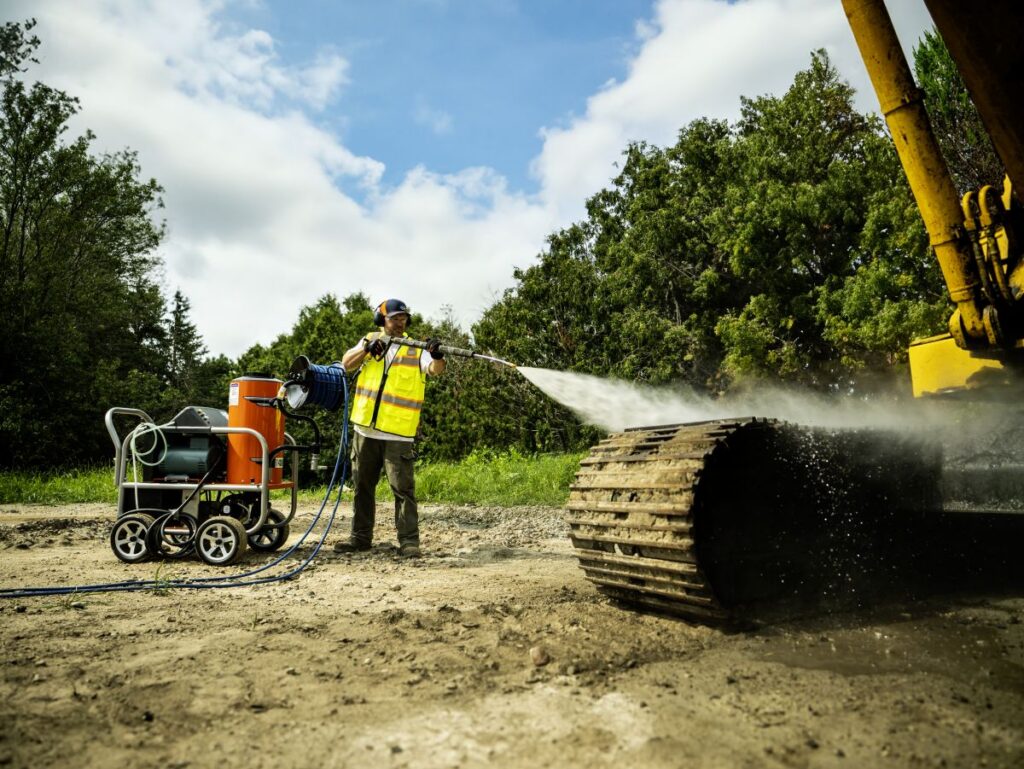
- Heavy equipment: 15°
- Concrete cleaning: 15° or 25°
- Vehicle washing: 25° or 40°
- Chemical application: Soap nozzle
Using the correct nozzle helps maximize efficiency and protect equipment surfaces.
Why Nozzle Size Matters
Nozzle size determines water flow relative to pump output. If the nozzle opening is too small, pressure increases and can damage the pump. If it is too large, cleaning power decreases.
Matching the nozzle size to the pressure washer’s PSI and GPM specifications ensures optimal performance.
Commercial Pressure Washer Nozzle Tips
Professional cleaning crews often carry multiple nozzles and switch between them depending on the cleaning task.
Best practices include:
- Inspect nozzles regularly for wear or debris
- Replace damaged nozzles
- Match nozzle size to pump specifications
- Store nozzles properly to prevent contamination
These practices ensure consistent cleaning performance.
When you match the right nozzle to each cleaning task, you protect your equipment, speed up jobs, and get consistently better results. To keep your crews productive and your machines performing at their best, visit your local Alkota distributor to pick up the correct nozzles, replacement tips, and other pressure washer accessories tailored to your specific equipment.