In wet or confined workspaces, safety isn’t optional – it’s foundational. Facilities such as food processing plants, manufacturing floors, wash bays, and maintenance rooms all present unique challenges where moisture, limited airflow, and electrical equipment intersect. Selecting the right commercial power washer electric system plays a critical role in reducing risk while maintaining effective cleaning performance.
At Alkota Cleaning Systems, electric commercial power washers are designed specifically for environments where emissions control, operator safety, and durability are non-negotiable.
Why Electric Commercial Power Washers Are Better Suited for Confined or Wet Areas
Confined or indoor environments amplify the risks associated with traditional gas-powered equipment. Exhaust fumes, heat buildup, and fuel handling introduce hazards that many facilities simply can’t accommodate. Electric commercial power washers address these concerns by eliminating combustion altogether.
Because electric units produce no exhaust emissions, they are inherently safer for enclosed spaces. They also reduce fire risk and minimize heat output – an important factor in tight or temperature-controlled environments.
Many facilities choose electric systems for these key advantages:
- No open flame
- No carbon monoxide or exhaust emissions
- Reduced fire and ignition risk
- Lower ambient heat generation
- Consistent performance without fuel handling
- Compatibility with GFCI-protected electrical systems
These benefits make electric commercial power washers a strong fit for operations such as food and beverage processing, indoor wash bays, maintenance rooms, oil refineries, and other areas where ventilation is limited or moisture is unavoidable.
Electrical Safety Considerations in Wet Workspaces
While electric power washers offer clear safety advantages, working with electricity in wet environments still requires careful system design and proper procedures. A well-engineered electric commercial power washer includes safeguards that protect both operators and equipment.
Critical electrical safety features typically include:
- Ground Fault Circuit Interrupter (GFCI) protection
- Sealed and industrial-rated motors
- Protected electrical connections and components
- Compliance with OSHA and NFPA electrical standards
Beyond equipment design, safe operation depends on proper installation and daily use. Electrical connections should be elevated and protected from standing water, cords should be inspected regularly, and only industrial-rated power connections should be used. These measures significantly reduce the likelihood of electrical faults or operator exposure.
All-Electric vs. Electric Drive with Gas Heat: Key Differences
Not all electric commercial power washers operate the same way. One of the most important distinctions to understand is the difference between all-electric systems and electric drive units with gas heat. Each configuration serves different safety, performance, and facility requirements.
All-Electric Commercial Power Washers
All-electric units rely entirely on electricity for both pump operation and water heating. This design eliminates combustion completely, making it ideal for indoor environments with strict air-quality or ventilation requirements.
These systems are often chosen for facilities that need dependable cleaning without introducing fuel-based heat sources.
Benefits include:
- Zero combustion emissions
- Simplified installation requirements
- Minimal ventilation needs
- Quiet, consistent operation
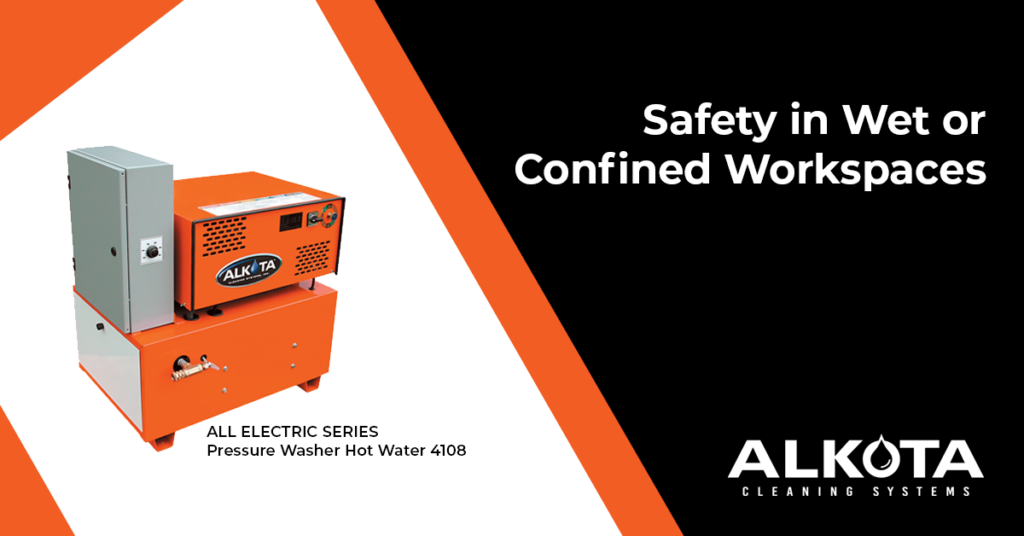
The Model 4108 is an example of an all-electric unit engineered for indoor commercial and industrial cleaning where safety and efficiency are priorities.
Electric Drive with Gas Heat Systems
Electric drive units with gas heat combine the safety of an electric motor with the superior cleaning power of gas-heated water. In this configuration, electricity powers the pump, while LP or natural gas is used strictly for heating.
This approach is well-suited for applications that require higher temperatures to break down grease, oil, or protein-based soils.
Advantages include:
- Higher maximum water temperatures
- Faster cleaning of heavy contamination
- No engine exhaust in the workspace
The Model 4301 is a stationary, electric-driven, gas-heated system designed for industrial facilities that need enhanced cleaning performance while maintaining controlled emissions.
Stationary vs. Portable Electric Units: Safety Through Proper Configuration
Beyond power and heat sources, the physical configuration of an electric commercial power washer also impacts workplace safety. Choosing between stationary and portable units should be based on how and where the equipment will be used.
Stationary units are commonly selected for permanent wash bays or centralized cleaning operations. They reduce clutter, limit hose movement, and provide consistent access to power and plumbing. Portable units, on the other hand, are better suited for facilities that require flexibility across multiple cleaning zones.
Key considerations include:
- Stationary units for fixed locations and repeat cleaning tasks
- Portable units for multi-area or mobile maintenance teams
- Proper hose management to reduce trip hazards
- Adequate electrical access for the selected configuration
Matching the unit type to the workspace helps minimize safety risks while improving efficiency.
Best Practices for Safe Operation in Confined Spaces
Even the safest equipment requires proper training and procedures. Facilities using electric commercial power washers in wet or confined spaces should establish clear operational standards.
Recommended best practices include:
- Verifying electrical compatibility, voltage, and on-site power (such as single or 3-phase power) before installation
- Ensuring adequate drainage to prevent standing water
- Training operators on proper startup and shutdown procedures
- Conducting routine maintenance and inspections
- Using appropriate personal protective equipment
When equipment selection and operator training align, electric commercial power washers provide a reliable and safe cleaning solution for demanding environments.
Choosing the Right Electric Commercial Power Washer for Safer Cleaning
Selecting a commercial power washer electric system goes beyond cleaning performance – it’s a decision that directly affects workplace safety, regulatory compliance, and long-term reliability. By understanding the differences between all-electric and electric-drive gas-heated systems, as well as between stationary and portable configurations, facilities can make informed choices that protect people and operations.
With purpose-built electric solutions designed for real-world industrial environments, Alkota helps facilities maintain high cleaning standards while prioritizing safety where it matters most.
Frequently Asked Questions
In most indoor or confined workspaces, an electric unit is typically the safest option because it produces no engine exhaust (no carbon monoxide) and avoids fuel handling. A properly selected electric commercial power washer is especially well-suited for wash bays, maintenance rooms, and processing areas where ventilation may be limited.
Yes – electric pressure washers are commonly used in wet environments, but they must be installed and operated correctly. Use GFCI protection, ensure proper grounding, keep electrical connections protected from standing water, and follow facility safety procedures for cord management, drainage, and inspections.
In most wet or moisture-prone environments, GFCI protection is strongly recommended (and often required by facility policy or code) to help reduce the risk of electric shock. Always follow your facility’s electrical standards and consult a qualified electrician for installation.
An all-electric system uses electricity for both the motor (drive) and the water heating. An electric drive with gas heat system uses electricity to power the pump, but uses gas to heat the water—often delivering higher heat output for tough soils.
– Example all-electric: Model 4108
– Example electric drive + gas heat: Model 4301
For many operations involving heavy grease, oil, or protein-based residues, gas heat can deliver higher heat output and faster soil breakdown – provided the workspace supports proper ventilation and safe installation. For facilities with strict emissions or ventilation limits, all-electric units may be the better fit.
Not always “safer,” but stationary systems can reduce common hazards in high-use areas by minimizing hose clutter, improving cord routing, and keeping the washer installed in a dedicated wash bay. Portable units are ideal for cleaning multiple areas, but they require extra attention to cord management and safe electrical access.
Operators should follow facility safety protocols and equipment guidelines. Common best practices include:
– Verify electrical compatibility and grounding
– Use GFCI protection where appropriate
– Ensure proper drainage to prevent standing water
– Inspect cords, plugs, and connections regularly
– Keep electrical connections elevated and protected
– Wear appropriate PPE for wet environments